

Reports have spiked of Denuvo-protected games being “Cracked” through so-called offline activators. The pattern is consistent: coordination on Discord, links shared privately, and a manual, ticket-based flow in which an operator walks a player through local scripts on their PC. This isn’t the usual, public “scene release” with a one-click crack. It’s a service model that works machine by machine and rarely survives patches. Recent coverage of piracy trends notes the same shift: fewer universal cracks, more ad-hoc workarounds that live in private communities.
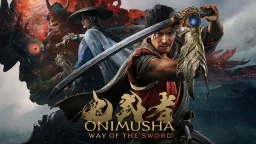
Several titles are frequently cited in these reports — including Stellar Blade, Digimon Story: Time Stranger, and Black Myth: Wukong — not as public, portable cracks, but as examples of this case-by-case “activation” approach spreading in private channels.
Why this isn’t a “real crack”
Traditional cracks aim to be reproducible: download, apply, play. Offline activators, by contrast, depend on hands-on steps that bind to a single PC. When an update lands—or when the game shuffles protected code—the workaround breaks and must be redone. That fragility lines up with how Denuvo Anti-Tamper actually works.
How Denuvo actually frustrates a universal “crack”
Denuvo is a protection layer around the executable. It obfuscates/encrypts code, then decrypts pieces at runtime only when integrity checks pass, while scattering anti-debugging and anti-patching tripwires throughout the game. Crucially, many builds tie those runtime unlocks to environmental conditions—keys, build data, sometimes hardware-derived fingerprints—so the code only decrypts on a system that matches expectations. Even if someone “unlocks” one PC, that artifact typically won’t transplant to another without repeating the whole dance. Technical write-ups and research describe exactly these mechanisms: per-machine tokens used to decrypt values at runtime and ongoing verification that the hardware fingerprint still matches while the game runs.
Why pirates gravitate to private “activations”
If a universal patch gets caught by integrity checks and a portable unlock fails because of per-machine tokens, the next option is… manual activation. That’s what we’re seeing: Discord-driven, case-by-case “help” rather than a public crack. Community posts openly advertise “offline activations” and steer people to servers that handle the process one user at a time—further evidence this is not a robust, shareable crack in the classic sense.
The security problem you shouldn’t ignore
These workflows often instruct users to disable antivirus (including Windows Defender) and run CMD/PowerShell as admin while pasting opaque commands. That’s a perfect setup for credential stealers, backdoors, cryptominers, or ransomware, plus persistence via scheduled tasks and registry changes. With protections down, a single bad script can siphon browser logins, Discord/Steam tokens, or wallet data—and keep access long after the “activation.” In short: you’re trading a one-off “unlock” for a compromised machine.
How this fits the 2025 piracy picture
This year’s trend line is clear: Denuvo hasn’t vanished, but the attack surface has shifted. Coverage points out that long, public droughts without workable, universal cracks have pushed pirates toward private tooling and activation services instead of big scene releases. Meanwhile, when cracks do appear, they’re infrequent and often tied to specific builds—hardly the “one and done” people remember from older DRM days.
Any “activation” that asks you to disable Defender and run admin-level scripts on your PC is high-risk. Because Denuvo’s checks and runtime decrypts are environment-dependent, these tricks don’t scale into a safe, universal crack—yet they do create a perfect window for malware and account theft. Treat them as what they are: opaque, one-off hacks with a real chance of costing you your data, your accounts, or your system.